

Weight-Loss Injections: What Are They and Could They Help?

Jules Walters • Feb 15, 2026
If you’ve spent years trying to lose weight — counting calories, joining gyms, cutting carbs — only to watch the numbers creep back up, you’re not failing. You’re dealing with a biology problem.
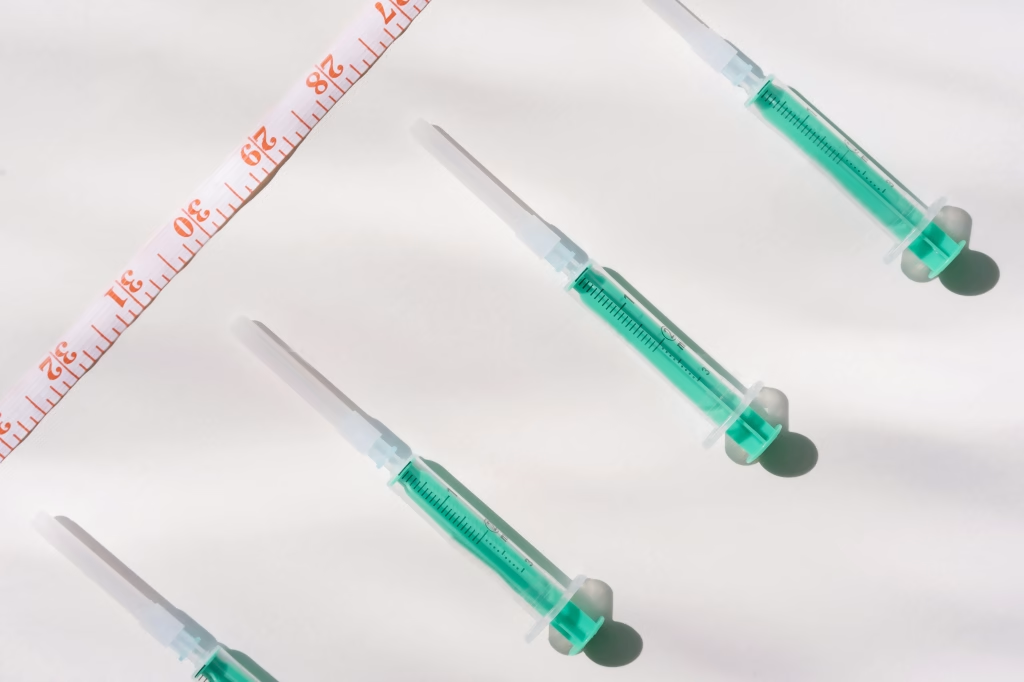
New science confirms that when we lose weight, our bodies fight back, increasing appetite and slowing metabolism in ways that are hard to override. That’s exactly why a new generation of weight-loss injections is generating so much excitement. They work with your body’s own hormonal system to quiet those hunger signals in a way that willpower alone cannot.
Why Losing Weight Is So Hard. It’s Not All in Your Head
Obesity is a chronic condition with a stubborn biological defense mechanism at its core. Research explains it plainly: when you lose weight, your appetite naturally increases and your energy expenditure falls, making it hard to keep the weight off long term. Lifestyle programs — including watching what’s on the end of your fork and moving more — will work eventually, but many people give up along the way.
Bariatric (weight-loss) surgery works better, but it is highly invasive, drastically reducing your stomach size, and can’t be offered to everyone due to the cost. That gap is precisely what the new medications aim to fill.
What Are GLP-1 Receptor Agonists?
The drugs you’ve probably heard about — Wegovy and Ozempic (both containing semaglutide), and Mounjaro (tirzepatide) — belong to a class called GLP-1 receptor agonists.
GLP-1 stands for glucagon-like peptide-1, a hormone your gut naturally releases after you eat. Its job is to signal to your brain that you’re full, slow the emptying of your stomach, and help regulate blood sugar.
In people with obesity, this system can become impaired. These injections work by mimicking and amplifying that natural signal, essentially turning up the volume on your body’s own “I’m full” message.

How Do They Reduce Appetite?
GLP-1 receptor agonists work through several pathways at once. They slow digestion, so food stays in your stomach longer and you feel fuller for more of the day. They also cross into the brain, where they act directly on the hypothalamus — the region that controls hunger — reducing the urge to eat.
The result is that food simply becomes less compelling. Many people on these medications report that they stop thinking about food constantly, lose the desire to snack, and feel satisfied with much smaller portions. This isn’t a matter of fighting cravings; the cravings diminish on their own.
What Do the Results Look Like?
The results are striking by the standards of any previous non-surgical weight-loss treatment. Clinical trials of semaglutide in people without diabetes showed an average weight loss of around 12 to 15% of body weight over roughly 16 months — significantly more than was ever achieved with older medications.
Newer combination treatments are showing even greater potential. Pairing a GLP-1 with regular exercise produced better outcomes still: greater fat loss, preservation of muscle, and improvements in heart-health markers, including blood sugar and fitness levels. Importantly, these drugs also reduce cardiovascular risk, which matters greatly for people who have carried excess weight for many years.
Important Things to Know Before Talking to Your Doctor
These medications are not a short-term fix. Experts now consider obesity a chronic condition requiring long-term management, much like diabetes or high blood pressure. Research shows that when people stop taking GLP-1 drugs, weight tends to return — which means that for many, ongoing treatment is part of the plan.
Side effects, mainly nausea, vomiting, and digestive discomfort, are common, especially in the early weeks as the dose is gradually increased. They are usually manageable and tend to ease over time.
If you have struggled with your weight for years and want to discuss whether these treatments might be appropriate for you, raising it with your GP or a specialist is a completely reasonable next step. You deserve to have the conversation with accurate information in hand; and the science now firmly supports that difficulty losing weight is a medical issue, not a personal failure.
References
- Lehmann EW, Torekov SS. Glucagon-like peptide-1 receptor agonists: the key to healthy weight loss maintenance? Cardiovascular Research. 2021;117(10):e120–e122. https://doi.org/10.1093/cvr/cvab249
- BMJ. Weight regain after cessation of medication for weight management: systematic review and meta-analysis. https://www.bmj.com/content/386/bmj.q1767.long
This article is for informational purposes only and does not constitute medical advice. Always consult a qualified healthcare professional before starting any new treatment.
New science confirms that when we lose weight, our bodies fight back, increasing appetite and slowing metabolism in ways that are hard to override. That’s exactly why a new generation of weight-loss injections is generating so much excitement. They work with your body’s own hormonal system to quiet those hunger signals in a way that willpower alone cannot.