

July 6, 2026: Your appetite and your genes
Welcome to this month’s edition of Boost Gut Health. As Hippocrates, the father of medicine, observed: all disease begins in the gut.
Two Gut Healthy Habits
Slow down the sugar. Pairing macronutrients can be a powerful technique to slow down the release of refined sugar. So, if you’re having a croissant for a breakfast treat, which has about 25 to 30 grams of carbohydrates from refined white flour, add some protein or some fat to the plate to slow down the sugar release. That could be a handful of nuts, some smoked salmon, or half an avocado.
Stop eating three hours before bed. This allows our body to focus on rest and has been shown to improve heart rate, blood pressure, and sugar control.
One Lesson
Our genes influence our appetite. With all the noise around weight-loss medications like Ozempic and Zepbound, it’s worth taking a step back to understand how we can influence our appetite.
This relatively new class of drugs works by mimicking a hormone called glucagon-like peptide-1 agonist (GLP-1). It makes you feel fuller for longer after eating.
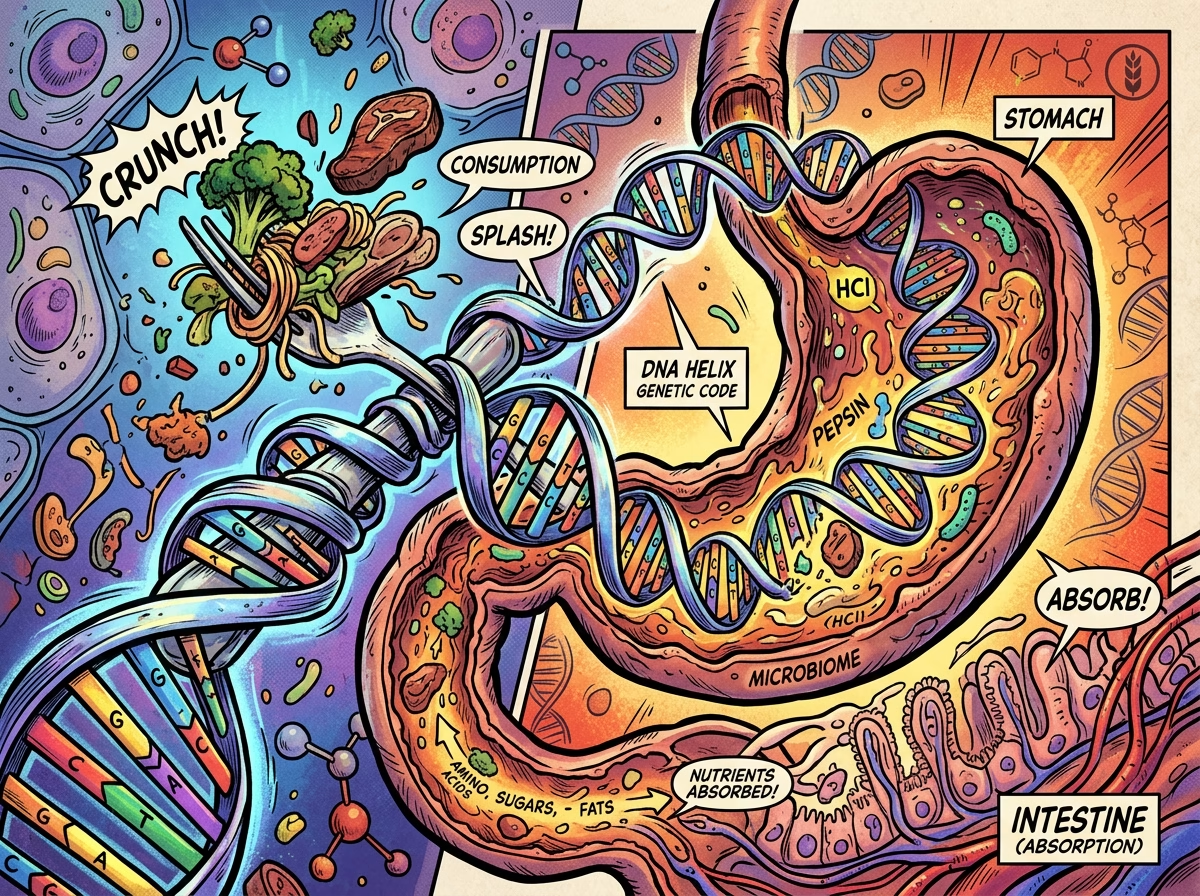
Our hunger is controlled by a number of genes that determine hunger hormones like GLP-1, and also ghrelin, leptin and the aptly-named fat-controller gene (FTO).
It turns out that hunger is a complex mechanism and, for some of us, a GLP-1 is a powerful option; particularly if we’ve tried and failed to lose weight before.
But there are other options. One is to understand your genetic make-up for hunger. We all have the same genes, but some are turned up and some are turned down. Thankfully, it’s now easy to access this personal information through companies like Phenomix Sciences and 3x4Genetics.
Another is to focus on protein first, as protein also makes us feel fuller for longer. The US government recently updated their dietary guidance to recommend more protein per day, at 1.2 to 1.6g of protein per kilo for adults. A rough rule of thumb for an adult weighing 65 to 70 kilos would be to aim for 25 to 30g of protein per meal for three meals a day.
One Quote
“I have a photographic memory but once in a while I forget to take off the lens cap.”
Milton Berle

Jules Walters
I'm a board-certified health coach, helping people make personalized choices to improve their health.
I studied through the Institute for Integrative Nutrition in New York, and I have a first-class degree in molecular genetics from King's College London.
My book Nano Health Habits is available on Amazon.
If you know someone who might value this monthly newsletter, share this link:
https://juleswalters.com/newsletter/